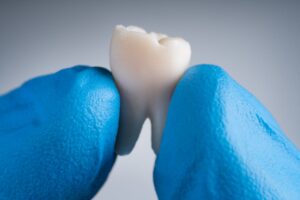
Have you ever felt a sharp pain when biting into food, only for it to disappear just as quickly? That confusing discomfort could be a warning sign of cracked tooth syndrome, a condition that many people overlook until it gets serious. At Legacy Dental SA, we see patients dealing with this issue regularly, and we want you to understand exactly what it means and what you can do about it.
What Is Cracked Tooth Syndrome?
Cracked tooth syndrome (CTS) is a condition where a tooth develops an incomplete fracture, meaning a crack exists but the tooth has not yet broken into separate pieces. Because the crack is often too small to show up on an X-ray, it can be tricky to diagnose, which is why so many people go weeks or even months without realizing what is wrong.
This condition most often affects the back teeth, specifically the molars and premolars, since those teeth handle most of the pressure when you chew. However, any tooth can develop a crack under the right circumstances.
Understanding cracked tooth syndrome early on makes a big difference. The sooner you catch it, the more treatment options you have and the better your chances of saving the tooth.
Who Gets Cracked Tooth Syndrome?
Cracked tooth syndrome can affect almost anyone, but certain people face a higher risk. Here’s who needs to pay extra attention:
- Adults over 40 are more likely to experience it, as teeth naturally wear down over time.
- People who grind or clench their teeth, a habit known as bruxism, put constant pressure on their teeth and are highly susceptible.
- Individuals with large fillings may be at risk because the remaining natural tooth structure becomes weaker.
- Athletes or active individuals who experience dental injuries are also prone to developing cracks.
If you fall into any of these groups and you live here in San Antonio, getting regular checkups at a trusted dental office can catch problems early, before they turn into something more serious.
Recognizing the Symptoms: What Does a Cracked Tooth Feel Like?
One of the most frustrating things about cracked tooth syndrome is that its symptoms come and go. This inconsistency is one of the key features that helps dentists identify it. Here are the most common signs to watch for:
Pain and Sensitivity
- Sharp pain when biting or chewing, especially when you release the bite
- Sensitivity to hot or cold foods and drinks that lingers for a few seconds
- A sudden, brief pain that is hard to pinpoint to a specific tooth
Discomfort Patterns
- Pain that is not constant but flares up with specific actions, like eating hard or crunchy food
- Discomfort when eating sweet or acidic foods
- A feeling that something is “off” in your bite even when there is no visible damage
Other Warning Signs
- Swelling of the gums around a particular tooth
- Occasional toothaches that seem to come and go for no reason
- A feeling of pressure or fullness in the jaw
If you notice any combination of these symptoms, do not wait. Reach out to a trusted dentist in San Antonio who can evaluate your teeth with the right diagnostic tools. Dr. Brian L. Eck at Legacy Dental SA has been diagnosing and treating these kinds of problems for over 40 years, and his team knows exactly what to look for even when a crack is not visible to the naked eye.
Common Causes of a Cracked Tooth
Understanding what causes a cracked tooth helps you take steps to prevent one in the first place. Here are the most frequent culprits:
Chewing Habits and Diet
- Biting on hard foods like ice, hard candy, popcorn kernels, or nuts can create tiny fractures over time.
- Chewing on non-food items like pen caps or fingernails adds unnecessary stress to your teeth.
Dental History and Structure
- Large fillings weaken the overall structure of a tooth, making cracks more likely.
- Old or worn dental work can shift the way bite pressure spreads across your teeth.
Physical Causes
- Teeth grinding (bruxism) is one of the leading causes. Many people grind their teeth at night without realizing it.
- Trauma or injury to the mouth, whether from sports, an accident, or a fall, can result in fractures.
- Temperature changes in the mouth, such as eating something very hot followed immediately by something cold, can cause the enamel to contract and expand rapidly, leading to cracks.
Age and Wear
As we get older, our teeth naturally become more brittle. Years of chewing, temperature changes, and normal wear gradually reduce the resilience of tooth enamel. This is why cracked tooth syndrome is so much more common in adults than in children.
How Dentists Diagnose Cracked Tooth Syndrome
Diagnosing this condition requires more than just a visual check. Since many cracks are invisible to the naked eye and do not always appear on standard X-rays, dentists rely on a combination of methods:
- Bite tests: Patients bite down on a special stick or instrument, and the dentist notes which teeth cause pain when pressure is applied or released.
- Transillumination: A bright light shines through the tooth to reveal hidden cracks.
- Probing: A dental probe traces the gum line around each tooth to detect unusual tenderness.
- Dye tests: A special staining dye is applied to make fine cracks more visible.
- Digital X-rays: While standard X-rays often miss hairline cracks, newer digital imaging technology offers better resolution and detail.
At Legacy Dental SA, Dr. Eck uses advanced dental technology to make sure nothing gets missed. A thorough, careful examination is the foundation of an accurate diagnosis, and that is something the team here takes seriously.
Treatment Options for Cracked Tooth Syndrome
The good news is that cracked tooth syndrome is very treatable, especially when caught early. The right treatment depends on how deep the crack is, where it is located, and how much of the tooth is affected.
H3: Dental Bonding
For minor surface cracks, dental bonding is a quick and effective option. The dentist applies a tooth-colored resin material to the crack, which seals it and restores the appearance of the tooth. This is often the least invasive treatment available.
Dental Crowns
If the crack is deeper or more extensive, a dental crown may be the best solution. A crown fits over the entire visible part of the tooth, protecting it from further damage and distributing bite pressure more evenly. Crowns at Legacy Dental SA are metal-free and designed to match the natural color of your teeth for a seamless look.
Root Canal Therapy
If the crack has reached the inner pulp of the tooth (the soft tissue that contains nerves and blood vessels), a root canal becomes necessary. This procedure removes the damaged pulp, cleans the canal, and seals it to prevent infection. Contrary to what many people fear, modern root canal therapy is no more uncomfortable than getting a filling.
Tooth Extraction
In cases where the crack extends below the gum line or splits the tooth root, saving the tooth may not be possible. In that situation, extraction is the safest option. After extraction, restorative options like dental implants or bridges can replace the missing tooth and restore full function.
Choosing the Right Treatment
The key takeaway here is that no two cases of cracked tooth syndrome are identical. Your treatment plan should always be personalized to your specific needs. That is exactly the approach Dr. Eck takes with every patient who walks through the door at Legacy Dental SA.
How to Prevent Cracked Teeth
Prevention is always better than treatment. While you can’t eliminate all risk, you can take practical steps to protect your teeth:
- Wear a night guard if you grind your teeth while sleeping. A custom-fitted guard from your dentist offers the best protection.
- Avoid chewing on hard objects like ice, pen caps, or hard candy.
- Wear a mouthguard during sports to protect your teeth from impact.
- Get regular dental checkups so your dentist can spot early signs of wear, stress fractures, or other warning signs before they turn into a bigger problem.
- Treat old fillings promptly when they wear down or crack, since damaged restorations weaken the surrounding tooth.
- Manage stress, since stress is a major driver of teeth grinding and jaw clenching.
Small habits, practiced consistently, go a long way toward protecting the long-term health of your smile.
When Should You See a Dentist?
Don’t put off a dental visit if you notice any of the following:
- Pain when biting that comes and goes
- Sudden sensitivity to hot or cold that did not bother you before
- Aching around one particular tooth with no obvious cause
- Visible lines or chips on the tooth surface
Waiting makes things worse. What starts as a minor hairline crack can deepen, reach the nerve, and eventually require a root canal or extraction. Early action almost always means a simpler, less expensive treatment.
Conclusion: Take Action Before It Gets Worse
Cracked tooth syndrome is sneaky. It doesn’t always hurt in an obvious way, and its symptoms can come and go in a way that makes you wonder if anything is really wrong. But ignoring it is not the answer. The longer a crack goes untreated, the deeper it can grow and the harder it becomes to fix.
If you are in San Antonio and you have been experiencing unexplained tooth pain, sensitivity, or discomfort while chewing, now is the time to act. Visit our dental office at Legacy Dental SA, conveniently located at 13205 George Road, San Antonio, TX 78230. Dr. Brian L. Eck and the entire Legacy Dental SA team are here to give your smile the care it deserves. Call us at (210) 767-3562 to schedule your appointment today!